
The Tech graduate is CEO of Stitch Inc., which plans to cover three-quarters of a mile of the Downtown Connector with a 17-acre park.
(text and background only visible when logged in)
Jack Cebe’s day to day work is about nothing less than transformation in Downtown Atlanta. He’s the first president and CEO of Stitch Inc., an organization working to cover three-quarters of a mile of I-75 and I-85 with a 17-acre park and spur new development and affordable housing options. Cebe is a two-time Georgia Tech graduate with a master’s in civil engineering in 2017 and an MBA in 2019.
1. Capping 14 lanes of interstate highway is ambitious, to say the least. Where did the idea for The Stitch come from?
The earliest proposal for capping the Downtown Connector I’ve found predates the 1996 Atlanta Olympic Games. In the early 1990s, Central Atlanta Progress and the City of Atlanta held an international competition for the redesign of Peachtree Street, Woodruff Park, and Edgewood and Auburn avenues. Many of the submissions, including the winner, proposed capping the Downtown Connector at Peachtree Street with a park. The current vision for The Stitch began in the late ‘90s when Central Atlanta Progress led a neighborhood planning study for north Downtown. A cap and park over the Connector became a key recommendation and captured the imagination of the community.
2. How is this structurally possible, and how unique is it compared to other cities?
It’s like a green roof you would find on a building, but on top of a highway bridge. While the permanent, stable loads are more significant than a typical vehicular bridge, the transient loads are much lighter due to infrequent cars and trucks in the park, so required beam sizes are not hugely different.
There are 60+ capping projects similar to The Stitch across the U.S., and you may have visited one without even knowing! The Rose Kennedy Greenway in Boston is over an interstate. Chicago’s Millennium Park (home of “The Bean”) is built atop a parking deck and rail lines. Klyde Warren Park has transformed downtown Dallas from a sea of parking lots and office buildings into a vibrant, people-focused arts district.
We even have a local example, albeit at a much-smaller scale. The 5th Street bridge connecting Georgia Tech to Midtown was key to the development and success of Tech Square.

Jack Cebe speaks about The Stitch at Atlanta’s inaugural Downtown Day. (Photo courtesy: Jack Cebe)
3. How did you get involved with the project?
I have been a fan of Downtown since my days as a Georgia Tech student. Atlanta’s most interesting architecture, history, and culture are all Downtown. There is huge potential to make it our region’s top destination and neighborhood. Throughout my career, I’ve worked on many design projects that focus on making public spaces more attractive and supportive of strong neighborhoods, including projects like The Stitch. After hearing about the project’s promise for many years, I was immediately excited to apply when the Atlanta Downtown Improvement District posted the opportunity.
4. What do you hope Atlantans will feel or experience the first time they walk across The Stitch someday?
Aside from feeling happy, rejuvenated, inspired, and connected to Downtown Atlanta, I hope people see the immense transformation that thoughtful, civic-minded infrastructure can have on communities. Like the Beltline, The Stitch is a community-driven effort and would not be happening but for the many community members and project partners who have lent their time, energy, and resources. Ultimately, I would love to see it inspire visitors to support similar projects in their communities.
5. How do you stay motivated and energized throughout big multi-year efforts like this one?
I think design professionals are drawn to the profession because they like to solve challenging problems and see tangible results from their efforts. While I’m no longer producing design drawings or plan sheets, I am constantly presented with new and interesting problems to solve that move the project forward bit by bit. Combined with working alongside amazing colleagues and partners who share my passion for Downtown Atlanta and The Stitch, that keeps me going despite the many challenges that arise.
6. What drew you to civil engineering?
My career has been an evolution. After quickly realizing that I didn’t want to continue pre-med during my freshman year, I pivoted to landscape architecture not exactly knowing what the profession was — my justification at the time was that I enjoyed yard work. After realizing the science, horticulture, art, and design involved, I was hooked. I landed an internship at a firm that specialized in multimodal transportation. This introduced me to civil engineering, and I quickly found a passion and knack for bringing my skills as a landscape architect to solving engineering problems.

Part of Downtown Atlanta and the Connector today. (Courtesy: The Stitch)

The Downtown Connector and surrounding area reimagined with The Stitch. (Courtesy: The Stitch)
7. Why did you choose Tech for your master’s degrees?
Georgia Tech’s reputation for civil engineering and the dual-degree master’s program focused on transportation planning and engineering were both a major draw. I was offered a graduate assistantship in Randall Guensler’s lab working on the Automated Sidewalk Safety and Quality Assessment System, which aligned with my passion for transportation accessibility for users of all abilities. I will never forget the looks I received pushing the sidewalk assessment tool, which looked like an empty wheelchair, to inventory sidewalks across Atlanta.
8. How did your Tech experience shape the engineer you are today?
Georgia Tech’s program helped me fill fundamental engineering knowledge gaps and shaped me into a more well-rounded design professional. It also broadened my professional network in a major way. In addition to meeting new people in the program, many of whom I work with regularly today, it provided conduits to get involved with professional development opportunities locally and nationally like the Institute of Transportation Engineers Georgia Chapter, the Transportation Research Board, and the Eno Future Leaders Development Conference.
9. You paired a civil engineering master’s with an MBA. How do those skills mesh or complement each other?
In addition to introducing me to core business competencies, the MBA program helped to hone my communications skills and expand my understanding of private sector businesses related to engineering. For example, my classes in real estate development introduced me to Atlanta companies and professionals in this sector, who are critical partners in bringing The Stitch vision to life.
10. If you could instantly solve any transportation, connectivity, or urban issue, what would it be?
One of the biggest issues facing our communities today that gets shockingly little attention is roadway safety. Year after year, traffic fatalities and serious injuries impact thousands of families across the Atlanta region. In recent years, the issue has worsened to the point where traffic fatalities outpace homicides as a cause of death. You should not have to take your life into your own hands just to go to work or walk across the street.
Most risk factors that lead to deaths and serious injuries can be solved through engineering. Several communities in Europe and the U.S. have done so — Hoboken, New Jersey, has achieved zero traffic deaths for the past seven years by prioritizing traffic safety when investing in their infrastructure.
One component of that is more public investment in transportation modes like walking, biking, scootering, and transit. They are inherently low risk when transportation systems are designed to prioritize safety. Investment in non-driving modes even benefits you if you never use them, as studies show that many drivers will switch to other modes if they are safe, convenient, and efficient, which reduces traffic congestion.
(text and background only visible when logged in)
Related Content
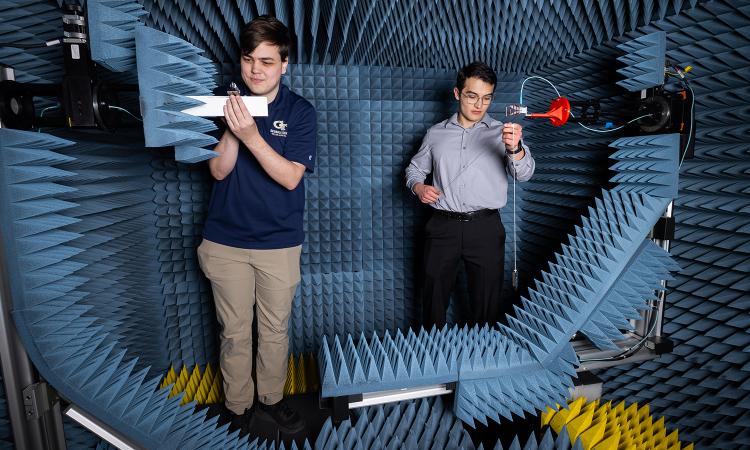
Behind the Lab Doors
With thousands of faculty and student researchers and countless research areas spread across eight schools, you never know what you’ll see when you visit a lab space.
With thousands of faculty and student researchers and countless research areas spread across eight schools, you never know what you’ll see when you visit a lab space.
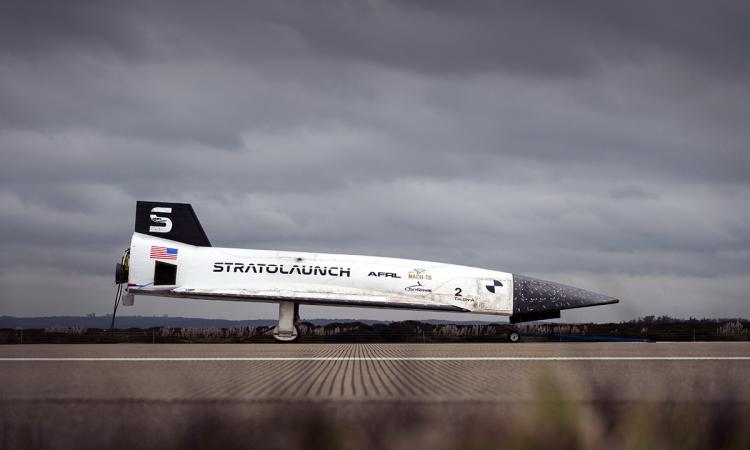
At One Mile Per Second, Opportunities Come Fast
As CEO of Stratolaunch, aerospace engineering alumnus Zachary Krevor is working to make hypersonic flight cheaper and more accessible so the U.S. can meet the demands of a Mach 5+ future.
As CEO of Stratolaunch, aerospace engineering alumnus Zachary Krevor is working to make hypersonic flight cheaper and more accessible so the U.S. can meet the demands of a Mach 5+ future.

Industry Connections
Collaborating with industry gives companies access to world‑class expertise and new ideas. For students and faculty, it’s a direct line to the challenges defining real‑world engineering.
Collaborating with industry gives companies access to world‑class expertise and new ideas. For students and faculty, it’s a direct line to the challenges defining real‑world engineering.

Helluva Engineer
This story originally appeared in the Spring 2026 issue of Helluva Engineer magazine.
We’re taking you behind the scenes to some of the hidden (and not-so-hidden) labs across the College where Georgia Tech engineers are shaping the future. In these places, robots swim in a mini ocean or crawl across the moon’s surface, huge concrete beams loom, and invisible gas or high-frequency radio waves fly across the room. We’re also unwrapping how researchers help industry partners solve tough problems and improve their processes. Plus, a few students talk to their younger selves and look back at four years of growth on North Avenue.