
The initiative brings the Aerospace Systems Design Laboratory’s years of expertise in advanced modeling for aerospace systems to the problem of people and vehicular traffic.
(text and background only visible when logged in)

ASDL Senior Research Engineer Michael Balchanos (fifth from right) and his research team have partnered with the Georgia Tech Police Department and the Georgia World Congress Center Authority. The team has implemented a modelling dashboard to support real time pedestrian and traffic management for the FIFA World Cup games in Atlanta. (Photo: Devesh Murugesan)
(text and background only visible when logged in)
With Atlanta welcoming the world, Georgia Tech researchers are helping make sure fans, visitors, and residents have a safer, more seamless experience during the 2026 FIFA World Cup.
Researchers in the Aerospace Systems Design Laboratory (ASDL), with support from the Georgia Tech Police Department (GTPD), have worked with the Georgia World Congress Center Authority (GWCCA) for the past year to support pedestrian and traffic management. The lab’s insights are designed to improve traffic plans and crowd movement control policies before, during, and after Atlanta’s eight World Cup games.
ASDL Senior Research Engineer Michael Balchanos and a team of Ph.D. students have shadowed the GWCCA Police Department to understand the traffic management challenges during major events at Mercedes-Benz Stadium. They discovered that a key technical challenge is monitoring and understanding the constantly changing nature of safety planning and traffic operations during large-crowd “mega” events. That’s why they’ve developed data-calibrated simulations and digital twins to better support those operations during the World Cup.
“Our digital twins blend multiple streams of data to create models about how cars and people will move when they interact with each other. Once we determine their rules of behavior, our simulations evaluate different traffic interventions to avoid bottlenecks, traffic slowdowns, and unwanted crowdedness,” said Balchanos, who is leading the project. “Our custom-built interface allows us to build different scenarios and simulate different approaches, in real time, as conditions change.”

ASDL’s digital twins compile multiple streams of data to model and predict traffic behavior. (Photo: Devesh Murugesan)

The World Cup is Atlanta’s largest multi-week sporting event since the 1996 Olympic Games.
Balchanos said decision makers can use that dashboard to advise what interventions, if any, should be used, and when. Enabled by simulation running in the background, the interactive tool uses the simulated traffic data to rapidly evaluate the impact of these interventions.
His team includes aerospace Ph.D. students Hajar Mali, Nathnael Geneti, Balaji Ravikanti, and Mario Zarate.
“While it may seem surprising for aerospace researchers to work on solutions for traffic system-related decision-making problems, this effort is actually the latest initiative under the decade-long partnership between ASDL and GTPD,” said ASDL Director and Regents’ Professor Dimitri Mavris. “By leveraging ASDL’s data-driven simulation and digital twin capabilities, this initiative brings the lab’s years of expertise in advanced modeling for aerospace systems to the problem of people and vehicle traffic in downtown Atlanta during the games.”
The World Cup is Atlanta’s largest multi-week sporting event since the 1996 Olympic Games. ASDL got involved after GTPD Chief Robert Connolly and members of Georgia Tech’s Administration and Finance team looked for ways to leverage research capabilities to support the GWCCA.
“Through our partnership with ASDL, we are using modeling, simulation, and data analysis to better understand transportation, mobility, and campus operations,” said Connolly, who also serves as vice president for Public Safety. “While this current work supports GWCCA and the planning of FIFA, the benefits extend far beyond a single event. The insights will help Georgia Tech make more informed, data-driven decisions as our campus grows. By evaluating traffic patterns, pedestrian movement, and infrastructure needs, we can enhance the campus experience, anticipate future challenges, and better serve our community."
For example, GTPD and ASDL have used the past year to focus on delivering data-driven assessments for the impact of Campus Cycle Track, a bi-directional path that opened in 2025. ASDL also has developed data-calibrated simulation tools for evaluating traffic alignment alternatives on road layouts and strategies for directing vehicle and pedestrian traffic across the campus and during various events.
“Our goal is to support a safe, secure, and accessible campus. This mutually beneficial relationship has infused research into the GTPD’s operations, while allowing ASDL to refine its data analytics and modeling and simulation capabilities,” Mavris said. “It’s a win-win for campus and the city as we welcome soccer fans from around the world.”
While this current work supports GWCCA and the planning of FIFA, the benefits extend far beyond a single event. The insights will help Georgia Tech make more informed, data-driven decisions as our campus grows.
GTPD CHIEF ROBERT CONNOLLY
(text and background only visible when logged in)
Related Content
Digital Doppelgängers
Engineers are building computerized replicas of cities, and even Georgia Tech’s campus, to save lives and create a better, more efficient world for all of us.
Engineers are building computerized replicas of cities, and even Georgia Tech’s campus, to save lives and create a better, more efficient world for all of us.

What It Takes to Deliver a Tech‑Heavy World Cup
Electrical and computer engineers explain some of the newest and most crucial technology required for a seamless, safe, enjoyable World Cup in Atlanta and across North America.
School of Electrical and Computer Engineering
Electrical and computer engineers explain some of the newest and most crucial technology required for a seamless, safe, enjoyable World Cup in Atlanta and across North America.
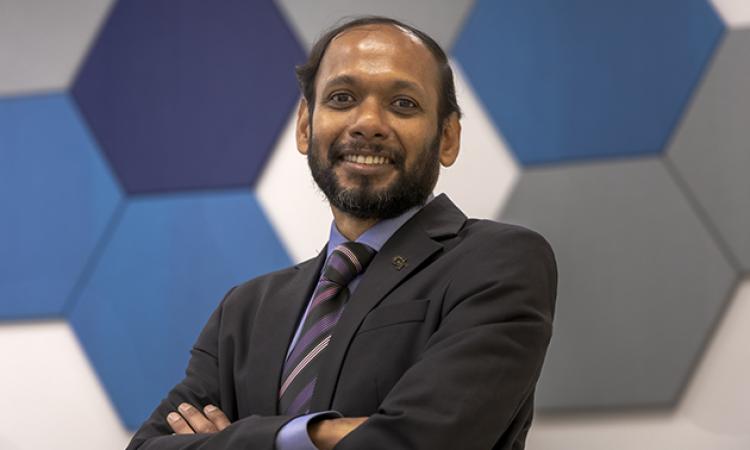
The Slow and the Furious: The Researcher Driven to Curb Atlanta’s Soul-Crushing Commute
A civil engineer’s unexpected path to Georgia Tech is paved with detours, data, and a dose of humor.
Georgia Tech Research News
A civil engineer’s unexpected path to Georgia Tech is paved with detours, data, and a dose of humor.