
MSE undergrad Mya Love Griesbaum has built a biotextile startup on her values of sustainable fashion and scientific exploration.

Mya Love Griesbaum took samples of Mycorrhiza Fashion's fabrics to the Fashion Institute of Technology Sustainable Business and Design Conference this spring to show how fungi can break down synthetic textile waste and create a new sustainable material.
The fashion industry churns out millions of tons of textile waste every year, most of which is made from synthetic materials that can linger in landfills for centuries. Georgia Tech materials science and engineering student Mya Love Griesbaum thinks that fungi might be the key to turning that problem around.
Griesbaum is the founder of Mycorrhiza Fashion, a startup using fungi to turn discarded synthetics, such as polyester, into new sustainable fabrics.
“We take existing textile waste and introduce microbes capable of degrading it,” Griesbaum said. “Right now, we're engineering microbial material that designers can use in place of traditional leather. However, we are also exploring making ecologically safe alternatives to other common polluting fabrics."
Her venture takes inspiration from high school research where she studied fungi’s ability to decompose complex materials in nature. Many species of fungi produce enzymes that can break down pollutants and synthetic materials, a process known as mycoremediation.
At Georgia Tech, she has continued her work by applying it to one of the biggest problems in the fashion industry: polyester waste. Polyester fibers are difficult to recycle or decompose. Yet they’re a staple of the fast fashion industry, a business model where companies rapidly produce high volumes of trendy clothing at low cost, often relying on cheap labor abroad.
Griesbaum and her small team of materials science engineers, fungus experts, and designers are focused on producing new textiles from discarded polyester and other textiles, producing fabrics with unique textures and patterns. They use polyester as a feedstock, growing microbes into a biomass that they can then process into a textile.
Griesbaum said the startup is currently in the research and development stage. The team is working to get feedback from designers on their prototypes to tune the materials’ mechanical properties. They’re also collaborating with soft goods companies to ensure their fabrics meet standards for environmental sustainability.
Griesbaum said they want to build a company that’s truly making a difference, not just greenwashing.
“We are making sure the science is solid,” she said. “We won’t release a product that claims it’s sustainable before it’s proven to be sustainable. This means gaining lab validation that our microbes can enzymatically degrade these synthetic fibers generated by fast fashion.”
Still, Mycorrhiza Fashion already has been modeled on the runway. A dress made item from the company’s fungi fabric material was showcased at the Atlanta Sustainable Fashion Show in 2025. Griesbaum also presented her fabrics at the 2026 Fashion Institute of Technology Sustainable Business and Design Conference.
“Since the textile is engineered from a living organism, the textiles have these motifs that are imbued with nature's beauty,” Griesbaum said. “The designers we've worked with seem to embrace this aesthetic.”


Materials science and engineering undergraduate Mya Love Griesbaum took her startup's fungi fabrics to the Fashion Institute of Technology's Sustainable Business and Design Conference in April 2026.
Griesbaum credits programs at Georgia Tech, such as CREATE-X and SUSTAIN-X, with helping her develop her startup and network with mentors, designers, and other entrepreneurs in sustainable innovation. She said these collaborations have been key to her efforts to transform her research idea into a tangible product.
“Engineering at the convergence of design, biology, and materials science is how the team is redefining the future of fabric,” she said.
Griesbaum also hopes that Mycorrhiza Fashion can inspire consumers to think more critically about the sustainability of their clothing.
“Clothing is inextricably tied to one’s identity and culture,” she said. “Growing materials that help heal the planet gives people the opportunity to strengthen their relationship with the planet and, as Tia Robinson has put it, wear their values.”
(text and background only visible when logged in)
Related Content
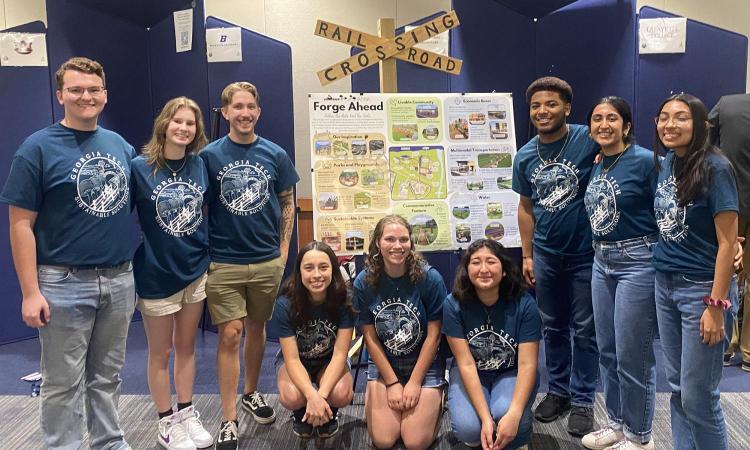
CEE Team Wins National Sustainability Competition
It's the second straight year Georgia Tech's civil and environmental engineering team has taken top prize in the ASCE Sustainable Solutions event.
School of Civil and Environmental Engineering
It's the second straight year Georgia Tech's civil and environmental engineering team has taken top prize in the ASCE Sustainable Solutions event.
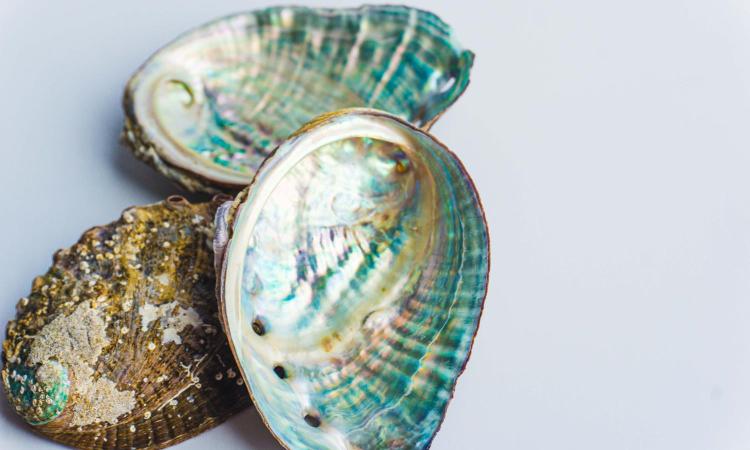
Seashells Inspire a Better Way to Recycle Plastic
Using nature’s approach to robust structures, aerospace engineering’s Christos Athanasiou has created a process that makes normally unpredictable recycled plastic reliable and strong.
Using nature’s approach to robust structures, aerospace engineering’s Christos Athanasiou has created a process that makes normally unpredictable recycled plastic reliable and strong.
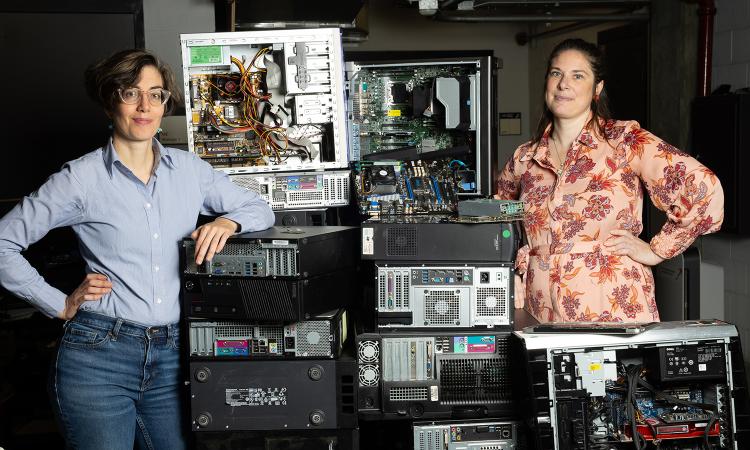
To Hell with Garbage
In the quest to reduce, reuse, and recycle, Georgia Tech engineers are at work on ways to divert more trash from landfills, tame plastic pollution, and cut waste from electronics.
In the quest to reduce, reuse, and recycle, Georgia Tech engineers are at work on ways to divert more trash from landfills, tame plastic pollution, and cut waste from electronics.