
(text and background only visible when logged in)
Ryan Pickren graduated from Georgia Tech with his computer engineering bachelor’s degree in 2017 and went to work in cybersecurity for Amazon. By then, he’d already spent several years doing penetration tests, or “pentests,” to find vulnerabilities in all kinds of computer networks and systems. Then he came back to North Avenue for a Ph.D., which he finished earlier this year.
Pickren is famous for something that happened in 2014: he was arrested and charged with computer trespass after altering the University of Georgia’s website calendar with a reference to the annual football game against Tech.
(text and background only visible when logged in)
1. How do you use your skills for good — and would you call yourself a “hacker”?
After undergrad, I joined the Amazon Web Services PenTesting team in Seattle, where I used my skills to identify and patch vulnerabilities in the cloud before attackers could exploit them. During my Ph.D., I focused on uncovering and addressing systemic cybersecurity flaws in critical infrastructure. Back in 2014, a jury of my peers (well, mostly U[sic]GA fans) called me a “hacker,” so I suppose that term is appropriate.
2. How did you get interested in cybersecurity?
I started hunting for security issues over a decade ago as an undergrad. I cut my teeth on scrappy bug bounty programs and sharpened my skills through specialized courses. Fortunately, Georgia Tech was an early leader in cybersecurity education, and their offerings only grew.

3. As an undergrad, you earned millions of airline miles finding bugs in United Airlines’ systems. What was the allure and what did you do with all those miles?
Honestly, my girlfriend at the time — and now wife and mother of my child — had an internship with PayPal on the West Coast, and I wanted to visit her on the weekends. I might have overshot how many miles that would take. [Ed. Note: Pickren also donated 5 million of those miles to Georgia Tech for student organizations involved in charity work to use.]
4. What other kinds of industries have you helped?
I’ve worked across social media, cloud, browsers, augmented and virtual reality, and most recently maritime. At Georgia Tech’s Cyber-Physical Security Lab, we even built a full-scale marine testbed — something truly unique that I highly recommend people check out!
5. Lately, you’ve been finding and fixing vulnerabilities in critical infrastructure systems. Why do those problems interest you?
My Ph.D. research focused on the attack surface created when cyber-physical systems intersect with web technologies. Many modern cyber-physical systems, from industrial devices to ships, have begun to incorporate web technologies in unusual and potentially dangerous ways — for example, secret embedded webviews inside privileged human-machine interfaces. Exploring this emerging trend has been exciting, and it allows me to bring my background in application-layer offensive security to a traditionally “old school” domain.

Ryan Pickren (center) led a project with Raheem Beyah (left) and Saman Zonouz to develop a new algorithm to warn against malicious attacks on infrastructure.
6. How do you decide when a system or device is a good candidate to investigate for issues?
You start to develop a “Spidey sense” after pentesting for a while. You’ll observe some unexpected behavior or odd error and know something isn’t quite right. If you tie enough software quirks together, you might eventually create a really impactful killchain of bugs.
7. Who’s winning in cybersecurity — the good guys or the malicious actors?
There’s the classic saying: “Hackers only need to get it right once, but defenders need to be right every time.” That rings true in pentesting. A small oversight can unravel years of product hardening if an attacker knows how to exploit it. That’s what makes defense so difficult. Still, with places like Georgia Tech producing talented security professionals, I think we’re in good hands.
8. What vulnerability or issue keeps you up at night?
Artificial intelligence agents learning to pentest. I’ve never worried much about basic scanning tools. Interesting bugs usually require chaining complex, creative exploits that scanners can’t find. But an advanced large-language-model-driven agent capable of reasoning creatively? That keeps me up at night.
9. What’s one thing we should all be doing to protect ourselves and our systems online?
Enable multifactor authentication and use a password manager.
10. You finished your Ph.D. in the spring. So, what’s next?
I’ve joined the family business in the powersports and marine industry. Specifically, I’m now working at AquaAmp, where we build rugged outdoor electronics. Stay tuned for some really exciting products in this space!
(text and background only visible when logged in)
(text and background only visible when logged in)
Related Stories
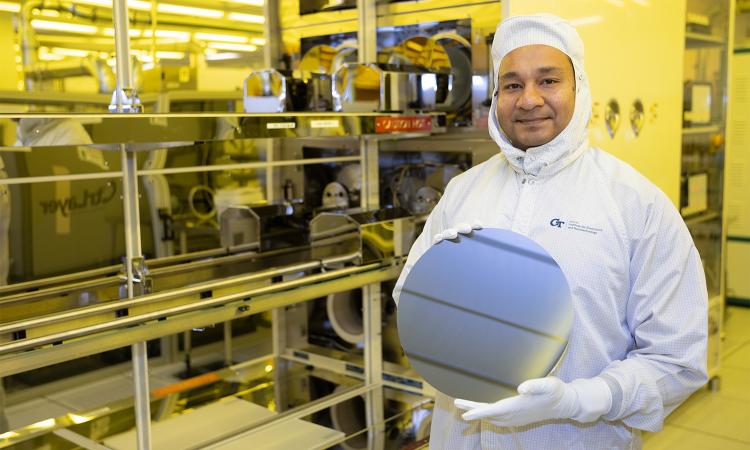
Engineering Next-Gen Computing
At Georgia Tech, engineers are finding new ways to shrink transistors, make systems more efficient, and design better computers to power technologies not yet imagined.
Digital Doppelgängers
Engineers are building computerized replicas of cities, and even Georgia Tech’s campus, to save lives and create a better, more efficient world for all of us.
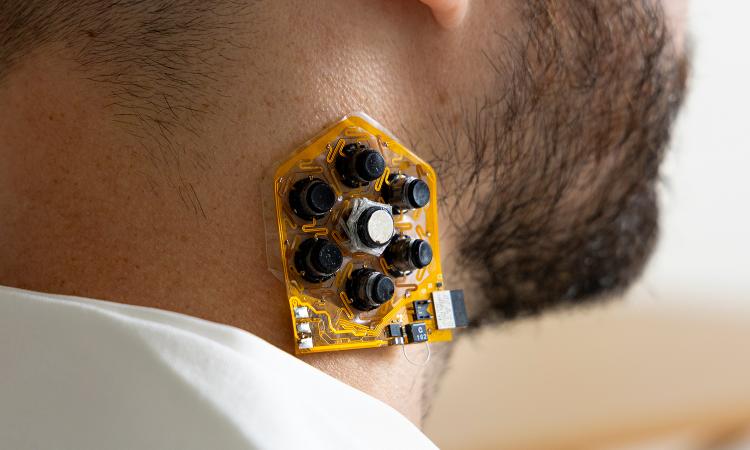
Wearing the Future
From smart textiles to brain-computer links, Georgia Tech engineers are designing wearables that connect humans and machines more closely than ever to sense, respond, and heal.
(text and background only visible when logged in)

Helluva Engineer
This story originally appeared in the Fall 2025 issue of Helluva Engineer magazine.
The future of computing isn’t just about making chips smaller or faster; it’s about making computing better for people and society. And Georgia Tech engineers are shaping that future, designing the processors and memory that will power technologies we can’t yet imagine. They’re using today’s digital power to shape the physical world, helping people live healthier lives, making cities safer, and addressing the digital world’s huge demands on real-world land and resources. Smaller, smarter, faster — the pace of change in computing is accelerating; log into our latest issue to see how Georgia Tech engineers are making it all add up.